
Article: South Asian Bridal Trends 2026: Colours, Fabrics, Lehengas and Modern Styling
South Asian Bridal Trends 2026: Colours, Fabrics, Lehengas and Modern Styling

Asian Bridal Trends 2026: Colours, Fabrics, Lehengas and Modern Styling
South Asian bridal fashion in 2026 brings together timeless tradition and modern personal style. From rich bridal reds and intricate embroidery to luxurious fabrics and contemporary dupatta draping, this year’s trends offer plenty of inspiration for every wedding

A South Asian wedding is more than a celebration. It is an expression of heritage, family, craftsmanship and individuality. Whether you are planning a traditional Baraat, an intimate Nikkah or an elegant Walima reception, your bridal outfit should feel meaningful, comfortable and uniquely yours.
At LebaasOnline, we bring Pakistani and Indian designer fashion closer to brides in the UK and beyond. If you are searching for a bridal lehenga, Pakistani wedding dress or modern South Asian bridal outfit, explore these key trends for 2026
What Are the South Asian Bridal Trends for 2026?
The leading South Asian bridal trends for 2026 include rich reds and maroons, jewel-toned wedding outfits, ivory and champagne palettes, luxurious velvet, flowing bridal lehengas, intricate gold embroidery and modern dupatta styling.
Brides are also choosing more personalised silhouettes and versatile wedding wardrobes, combining traditional craftsmanship with contemporary details. The best bridal look is one that suits your wedding function, complements your setting and allows you to celebrate with confidence.
1. Rich Reds, Deep Maroons and Jewel-Toned Bridal Colours
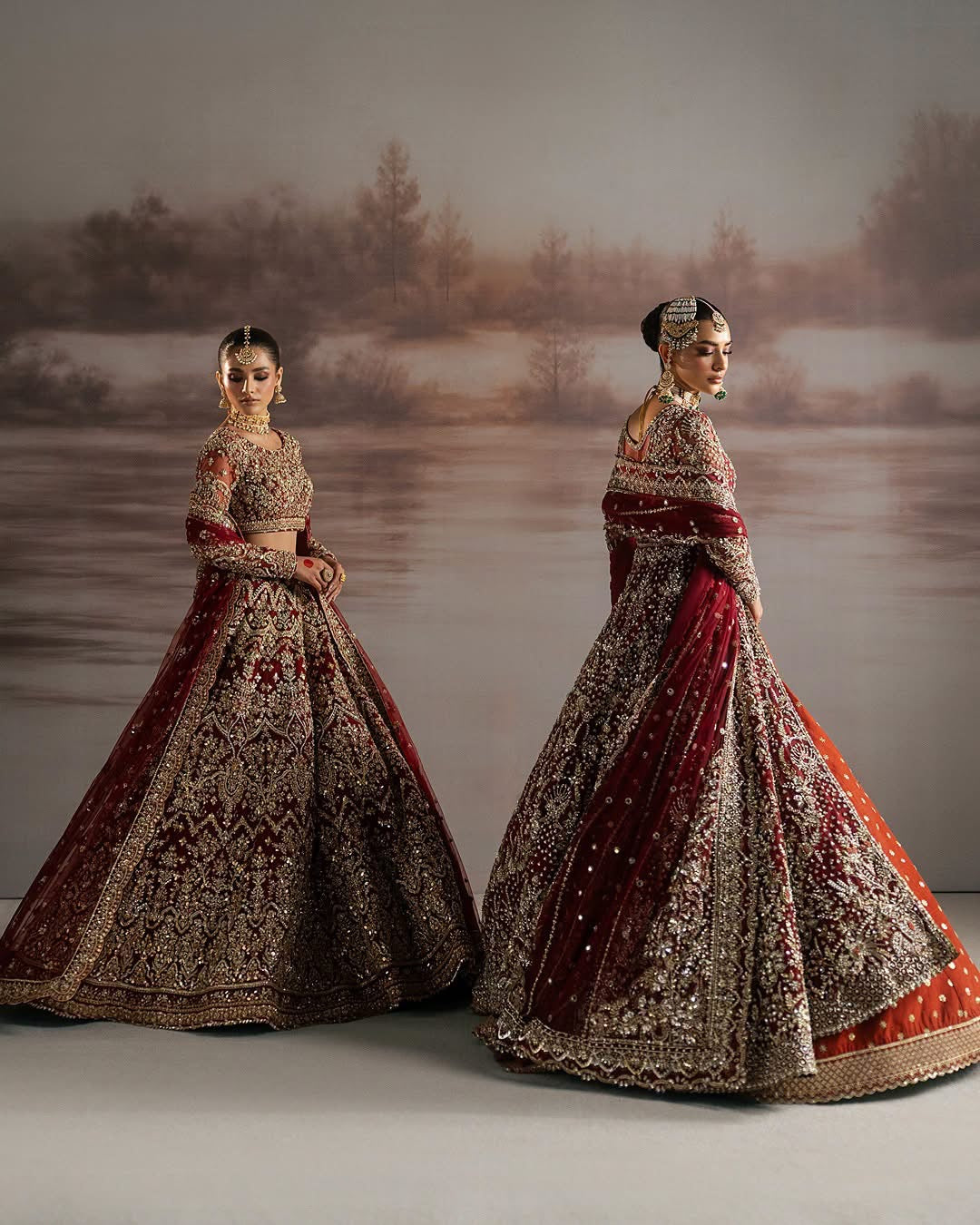
Red remains one of the most iconic colours in South Asian bridal fashion. From vibrant crimson to deep burgundy, red bridal outfits continue to represent tradition, celebration and timeless

For brides looking beyond classic red, the South Asian bridal trends for 2026 include a sophisticated range of rich and jewel-toned shades:
- Deep maroon and wine: Luxurious colours that pair beautifully with gold embroidery, antique jewellery and traditional bridal accessories.
- Burgundy and rust: Warm, refined shades that work particularly well for autumn and winter weddings.
- Emerald green and royal blue: Elegant alternatives for evening receptions and contemporary bridal looks.
- Ivory and champagne: Soft, graceful choices for daytime ceremonies and brides who prefer a lighter colour palette.
- Blush and muted pastels: Romantic options for Nikkah ceremonies, receptions and modern bridal wardrobes.
When choosing a bridal colour, consider the venue, lighting, season and jewellery you plan to wear. A shade that looks subtle in daylight may appear richer under evening lighting, so it is worth viewing fabric samples in different settings.
Explore Pakistani wedding dresses for more inspiration on traditional and contemporary bridal outfits.
2. Luxurious Bridal Fabrics: Velvet, Organza, Silk and Chiffon
Fabric has a major influence on how a bridal outfit looks, feels and moves. In 2026, brides are choosing materials that combine visual richness with comfort and practicality.
Velvet brings depth and opulence to South Asian bridal wear. It is especially suited to winter weddings, embroidered bodices, formal shawls and statement bridal ensembles.
Organza offers a light yet structured finish. Its delicate appearance makes it a popular choice for dupattas, layered skirts, sleeves and embroidered details.
Silk has a naturally elegant sheen and works beautifully for both traditional and contemporary wedding outfits. It can create a polished finish without relying on excessive embellishment.
Chiffon provides soft movement and graceful draping, making it ideal for flowing dupattas, veils and lighter bridal silhouettes.
When selecting a fabric, think about the season, venue, ceremony length and amount of movement you need. A beautiful bridal outfit should feel as special as it looks throughout the day.
3. Intricate Embroidery and Traditional South Asian Craftsmanship
One of the defining features of South Asian bridal fashion is its attention to detail. In 2026, intricate craftsmanship remains central to bridal design, with traditional techniques appearing alongside more modern silhouettes.
Gold and silver threadwork, embroidered borders, delicate embellishments and heritage-inspired motifs can transform an outfit into a memorable bridal ensemble.
Depending on the designer and collection, you may find details inspired by:
- Zardozi
- Dabka
- Resham embroidery
- Pearls
- Sequins
- Metallic threadwork
- Floral and traditional motifs
For a balanced look, pair a heavily embroidered bridal outfit with more understated accessories. Alternatively, a simpler outfit can be elevated with statement jewellery, an embellished dupatta or a beautifully detailed blouse.
The most successful bridal styling is not about following every trend. It is about choosing craftsmanship that reflects your personality and complements the overall mood of your wedding.
4. Bridal Lehengas with Modern Silhouettes
The bridal lehenga remains one of the most popular South Asian wedding outfits in 2026. Its flowing skirt, fitted blouse and coordinating dupatta offer endless opportunities for personal styling.
This year, brides can explore:
- Traditional flared lehengas with detailed embroidery.
- Contemporary lehengas with clean lines and statement blouses.
- Coordinated embroidery across the skirt, blouse and dupatta.
- Lighter silhouettes designed for greater ease of movement.
- Structured bodices paired with softer, flowing skirts.
- Statement sleeves, modern necklines and personalised blouse designs.
A bridal lehenga should complement your proportions and suit the way you want to move, sit and celebrate. Consider the weight of the embroidery, the length of the skirt and how securely the dupatta can be styled before making your final choice.
If you are planning your bridal outfit in the UK, read our Bridal Lehenga UK guide for further inspiration.
5. Modern Dupatta Styling for South Asian Brides
The dupatta can completely change the appearance of a bridal outfit. It can add colour, texture and movement while also creating a traditional finishing touch.
Some brides prefer a classic drape across the head and shoulders, while others choose a more contemporary arrangement that allows the embroidery and silhouette to stand out.
One of the most versatile bridal styling ideas for 2026 is the double dupatta look. This involves wearing two dupattas together: one arranged across the outfit and another used as a lighter head covering.
For example, a richly embroidered dupatta can be paired with a sheer veil in a complementary shade. This creates visual depth while allowing the bride to personalise her look.
Before the wedding day, try several dupatta draping styles with your complete outfit. This will help you find an arrangement that feels secure, photographs beautifully and remains comfortable throughout the ceremony.
6. Bridal Outfit Ideas for Every Wedding Function
Many South Asian weddings include several celebrations, each with its own atmosphere and dress code. Planning your wardrobe around each function can help you create a cohesive collection of outfits without making every look feel identical.
Mehndi and Dholki
For Mehndi and Dholki celebrations, consider cheerful colours such as yellow, green, orange and pink. Lighter fabrics, playful accessories and colourful embroidery can create a festive look suited to the occasion.
Nikkah
For a graceful Nikkah outfit, explore ivory, champagne, soft pastels or traditional bridal colours. Delicate embroidery, elegant tailoring and refined dupatta styling can create a sophisticated appearance.
Baraat
The Baraat is an opportunity to embrace a more traditional bridal look. Rich reds, maroons, elaborate embroidery and statement jewellery are beautiful choices for this important celebration.
Walima and Reception
For the Walima or reception, brides may prefer a different colour palette, such as emerald, silver, champagne, blush or deep blue. A flowing silhouette, embellished gown or contemporary formal ensemble can create a distinctive second bridal look.
You can also explore ready-made Pakistani clothing inspiration if you are planning outfits for wedding guests and family members.
7. How to Choose Your South Asian Bridal Outfit
Before selecting your wedding dress, consider these practical points:
Your wedding function: A traditional Baraat outfit may have different requirements from a daytime Nikkah or evening reception dress.
The season and venue: Consider whether you will be indoors, outdoors or celebrating in cooler weather. Fabric weight and layering can make a significant difference to comfort.
Your preferred silhouette: Choose a shape that complements your personal style and allows you to move comfortably.
The level of embroidery: Decide whether you prefer an intricately embellished outfit or a simpler design that allows jewellery and accessories to take centre stage.
Stitching and fit: If you are choosing an unstitched outfit, allow sufficient time for tailoring, fittings and alterations.
Your budget: Decide which details matter most to you, whether that is the fabric, embroidery, designer, silhouette or jewellery.
Your delivery timeline: If you are ordering from the UK or overseas, check availability, measurements, delivery times and return policies before purchasing.
At LebaasOnline, you can explore Pakistani and Indian designer fashion for weddings, formal occasions and special celebrations.
Visit the LebaasOnline homepage to discover our collections.
Frequently Asked Questions About South Asian Bridal Trends 2026
What are the most popular South Asian bridal colours for 2026?
Traditional red remains a timeless bridal choice. Brides can also explore maroon, burgundy, emerald, royal blue, champagne, ivory, blush and other jewel tones depending on their personal style, wedding function and season.
What fabric is best for a Pakistani bridal dress?
There is no single best fabric for every bride. Velvet can create a rich look for cooler weather, while organza, chiffon and silk offer different levels of structure, movement and shine. Consider the outfit’s weight, comfort and intended use before choosing.
Are bridal lehengas still popular in 2026?
Yes. Bridal lehengas remain a leading choice for South Asian weddings in 2026. Brides are combining traditional embroidery with modern blouses, lighter silhouettes, statement sleeves and personalised dupatta styling.
What is a double dupatta bridal style?
Double dupatta styling involves wearing two dupattas together, often with one arranged across the outfit and another used as a head veil. This allows brides to combine decorative detail with a lighter, graceful drape.
Should I choose an unstitched or ready-made bridal outfit?
An unstitched outfit gives you the opportunity to customise the design and fit through tailoring. A ready-made outfit can be convenient when you prefer an existing design and available size. Always check the product details, measurements and delivery timeline before ordering.
How early should I order my bridal outfit?
Order your bridal outfit around 6–12 months before the wedding date, especially if you need custom stitching, alterations or international delivery. Custom stitching may require additional time for tailoring, fittings and adjustments, so ordering early helps ensure your outfit is ready well before the wedding.
Find Your Bridal Inspiration at LebaasOnline
The best South Asian bridal outfit reflects who you are and the traditions that make your celebration special.
Whether you love the richness of traditional bridal reds, the elegance of an embroidered lehenga, the luxury of velvet or the softness of contemporary dupatta styling, the South Asian bridal trends for 2026 offer many ways to create a look that feels uniquely yours.
Explore Pakistani and Indian designer fashion at LebaasOnline and discover inspiration for your wedding celebrations, formal occasions and special moments.
For more bridal ideas, visit our fashion blog.


Leave a comment
This site is protected by hCaptcha and the hCaptcha Privacy Policy and Terms of Service apply.