
Article: Beyond Bridal: The New Language of South Asian Jewellery – How a New Generation Is Wearing Tradition Differently
Beyond Bridal: The New Language of South Asian Jewellery – How a New Generation Is Wearing Tradition Differently
Beyond Bridal: The New Language of South Asian Jewellery – How a New Generation Is Wearing Tradition Differently
Traditional craftsmanship, contemporary expression and the changing jewellery culture of South Asian fashion.
South Asian jewellery has always been more than an accessory. It carries history, artistry, identity and emotion. From the delicate details of traditional Karanphool to elaborate Hathphool, statement earrings and beautifully crafted hand ornaments, jewellery has long been an essential part of how South Asian communities celebrate their culture.
But something interesting is happening.
A new generation is looking at traditional jewellery differently. Young women are pairing heritage-inspired earrings with contemporary dresses. Statement hand jewellery is moving beyond bridal occasions. Men are experimenting with ear balis, rings and traditional accessories. And fashion jewellery is becoming an important part of everyday personal expression.
The question is no longer simply what jewellery should be worn with a wedding outfit.
It is how traditional South Asian jewellery can become part of a modern wardrobe.
At LebaasOnline, we find this evolution particularly exciting. The future of South Asian jewellery is not about leaving heritage behind. It is about rediscovering traditional designs, exploring new materials and wearing familiar shapes in unexpected ways.
1. The New Generation Is Rediscovering Traditional Jewellery
Traditional jewellery is experiencing a fresh interpretation.
Designs that were once associated mainly with weddings and formal occasions are finding new audiences through contemporary styling.
Think of oversized floral earrings, sculptural Karanphool, detailed Jhumkas, crescent-shaped ornaments, delicate pearl drops and statement Chandbalis.
The silhouettes may be traditional, but their styling is increasingly modern.
Instead of wearing a complete traditional jewellery set, younger fashion enthusiasts often prefer one distinctive piece. A statement earring can become the centre of an outfit, while the rest of the jewellery remains minimal.
This approach makes traditional jewellery more versatile and gives individual designs greater attention.
The emerging style: Heritage-inspired shapes, lighter styling, contemporary finishes and individual statement pieces.
2. Karanphool: A Traditional Silhouette with Contemporary Appeal
Karanphool earrings are a beautiful example of how traditional South Asian jewellery can evolve.
Recognised for their floral-inspired shape, intricate detailing and decorative appeal, Karanphool designs can be interpreted in many different ways.
Contemporary versions may incorporate:
- Crystal and zircon detailing.
- Pearl drops and delicate beadwork.
- Coloured stones and enamel finishes.
- Antique-inspired gold-tone settings.
- Oversized floral and sculptural arrangements.
- Lightweight designs for more comfortable styling.
The beauty of Karanphool lies in its versatility.
A statement pair can complement an embroidered Pakistani outfit, an elegant saree or a contemporary evening dress. Smaller interpretations can also bring traditional character to simpler outfits.
Rather than reserving these earrings for bridal wear, the new approach is to make them part of a wider occasion and fashion wardrobe.
For readers interested in the history and traditional appeal of Kundan-inspired jewellery, explore our article on Sabyasachi-inspired Kundan jewellery and luxury jewellery care.
3. Hathphool: From Bridal Tradition to Modern Hand Jewellery
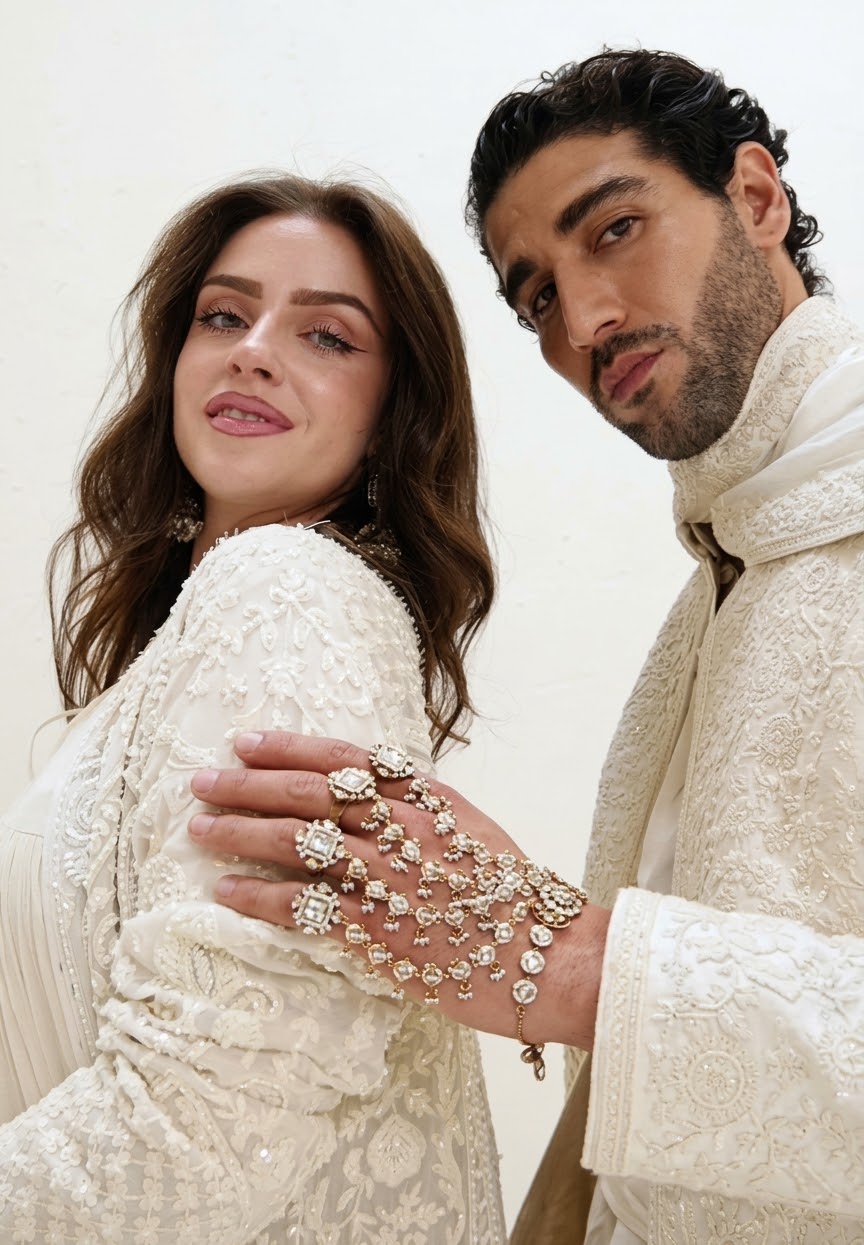
Hathphool is one of the most distinctive forms of South Asian hand jewellery.
Traditionally, it connects a wrist ornament with one or more finger rings through delicate chains. The result is an intricate accessory that draws attention to the hands.
Today, the design is being reimagined in numerous ways.
Contemporary interpretations include:
- Crescent-shaped motifs.
- Pearl and crystal hand chains.
- Multi-chain finger harnesses.
- Delicate bracelets connected to statement rings.
- Kundan-inspired and coloured-stone details.
- Minimal hand jewellery with a single decorative feature.
- Ghunghroo and jhumki-inspired hanging elements.
One particularly interesting development is the move towards more versatile designs.
Instead of wearing elaborate bridal hand jewellery only with a lehenga or wedding outfit, fashion enthusiasts can explore delicate versions with festive suits, sarees and Indo-Western clothing.
Hathphool also offers an opportunity to experiment with asymmetry. A statement piece on one hand, paired with simple rings or a bracelet on the other, can create a more contemporary look.
The idea is to preserve the beauty of traditional hand jewellery while making it relevant to modern occasions.
4. Men’s Jewellery: A Growing Part of South Asian Fashion
Jewellery is not exclusively a women’s fashion category.
South Asian men’s fashion has a long history of decorative accessories, including rings, chains, kadas, pendants and traditional ear ornaments.
Today, these accessories are being incorporated into contemporary wardrobes in more individual ways.
Some interesting styles include:
Ear balis and hoops: Small hoops, traditional-inspired balis and understated statement earrings.
Kadas and bracelets: Sculptural metal finishes, textured surfaces and traditional motifs.
Statement rings: Signet-inspired rings, engraved designs and distinctive shapes.
Chains and pendants: Minimal chains and pendants that can be worn with both traditional and contemporary clothing.
The appeal lies in personal expression rather than following a strict set of rules.
A simple ear bali can complement a contemporary kurta, while a statement ring or kada can add character to a more understated outfit.
South Asian men’s jewellery deserves greater recognition as part of the wider evolution of cultural fashion.
5. Traditional Jewellery Meets Western Fashion
Perhaps one of the most exciting changes is the way traditional jewellery is being styled outside traditional clothing.
A pair of ornate earrings no longer needs to be matched with an embroidered outfit.
Consider these combinations:
- Karanphool earrings with a simple black dress.
- Pearl Chandbalis with an elegant evening gown.
- Statement Jhumkas with a contemporary blazer.
- Traditional hand jewellery with a minimalist saree.
- Antique-inspired earrings with a white shirt and tailored trousers.
- A decorative necklace with a simple monochrome outfit.
The contrast between traditional detailing and modern silhouettes creates an interesting fashion statement.
This approach is particularly relevant to British Asian and international fashion audiences, where wardrobes often combine South Asian and Western influences.
The result is a more flexible way of dressing.
Jewellery becomes an individual expression of cultural identity rather than something that must match a particular occasion or outfit.
6. Fashion Jewellery: Why Materials and Finishes Matter
Another important part of this evolution is the growing variety of materials used in contemporary fashion jewellery.
Beautiful design does not always require solid gold or precious gemstones.
Fashion jewellery offers opportunities to explore different colours, finishes, shapes and decorative techniques.
Some materials and finishes worth understanding include:
Gold-plated brass: Brass-based jewellery with a gold-coloured plated finish. The appearance and durability depend on the plating quality and care.
Silver-tone finishes: A versatile alternative for contemporary, antique-inspired and evening jewellery.
925 sterling silver: An alloy containing 92.5% silver, commonly used in fine silver jewellery.
Cubic zirconia: A manufactured gemstone alternative frequently used to create a diamond-like appearance.
American Diamond: A widely used fashion-jewellery term, often referring to diamond-look stones. It should not be confused with natural diamonds.
Imitation Kundan: Jewellery inspired by the traditional Kundan setting and decorative appearance.
Imitation Polki: Designs that recreate the look of traditional uncut-stone jewellery.
Enamel detailing: Coloured decorative finishes that introduce vibrancy and contrast.
Oxidised finishes: Darkened metal finishes that create an antique or vintage-inspired appearance.
Pearl detailing: Natural, cultured or imitation pearls can introduce softness and elegance, depending on the design.
The important consideration is transparency. Customers should understand the materials, base metal and finish of the jewellery they purchase.
Fashion jewellery can be appreciated for its design, workmanship, versatility and affordability without being represented as precious-metal jewellery.
7. Statement Earrings, Layering and Individual Expression
One of the most interesting directions in contemporary jewellery styling is the move away from perfectly coordinated sets.
Instead, individual pieces are being selected to create a personal look.
A statement earring might be paired with a simple necklace. A delicate pendant could be worn alongside a textured bracelet. Several rings may be combined to create an individual arrangement.
Some styling ideas include:
- Combining pearl details with coloured stones.
- Mixing antique-inspired and contemporary finishes.
- Wearing one statement accessory instead of a complete matching set.
- Layering delicate chains with different pendant shapes.
- Combining traditional earrings with minimalist necklaces.
- Choosing accessories that complement rather than compete with embroidery.
This gives women more freedom to build a jewellery wardrobe gradually.
Rather than purchasing a complete set for one occasion, they can select individual pieces that work across different outfits.
8. Jewellery for Every Occasion, Not Just Weddings
South Asian jewellery has traditionally been closely associated with weddings, festivals and family celebrations.
These occasions remain important, but modern lifestyles have created more opportunities to wear distinctive accessories.
Everyday elegance: Small earrings, delicate pendants and understated bracelets.
Family celebrations: Pearl details, decorative Jhumkas and colourful statement earrings.
Festive occasions: Karanphool, Chandbalis, layered necklaces and hand jewellery.
Evening events: Crystal earrings, sculptural designs and statement accessories.
Weddings: More elaborate jewellery, coordinated pieces and traditional-inspired designs.
Contemporary fashion: Individual earrings, rings and accessories that bring cultural character to Western clothing.
The best jewellery wardrobe is not necessarily the largest. It is one that offers versatility and allows the wearer to create different looks with a smaller selection of thoughtfully chosen pieces.
9. What Could Shape South Asian Jewellery in 2027 and Beyond?
Rather than treating every new design as a temporary trend, it is worth looking at the broader changes influencing jewellery styling.
We believe several directions deserve attention:
1. Heritage-inspired contemporary design
Traditional shapes such as Karanphool, Chandbali and Hathphool will continue to provide inspiration for new interpretations.
2. More individual accessories
Consumers may increasingly favour distinctive earrings, rings and hand jewellery instead of purchasing only complete matching sets.
3. Colour and experimentation
Coloured stones, enamel, pearls and contrasting finishes offer opportunities to complement the increasingly diverse colour palettes of South Asian fashion.
4. Versatile jewellery wardrobes
Accessories that can be worn with traditional clothing, contemporary occasion wear and Western outfits have greater styling flexibility.
5. Greater interest in men’s accessories
Traditional-inspired men’s jewellery offers opportunities for more expressive styling.
6. Transparency about materials
As customers become more informed, clear descriptions of base metals, plating, stones and finishes will remain important.
These are editorial observations about the direction of fashion, rather than guaranteed predictions. But together, they suggest that South Asian jewellery has considerable room to evolve.
10. How to Build a Modern South Asian Jewellery Wardrobe
You do not need an extensive collection to create different looks.
Start with a few versatile pieces:
- One pair of elegant statement earrings.
- One pair of smaller everyday earrings.
- A traditional-inspired Karanphool or Jhumka.
- A delicate bracelet or Hathphool.
- A simple pendant or necklace.
- A selection of rings.
- One distinctive accessory for festive occasions.
Choose colours and finishes that work with your existing wardrobe.
Gold-tone finishes can complement warm colours and traditional embroidery, while silver-tone jewellery can create a cooler, contemporary appearance. Pearls and crystals offer additional versatility.
Most importantly, choose pieces that feel comfortable and reflect your own style.
The Future of South Asian Jewellery: Tradition Without Boundaries
The evolution of South Asian jewellery is not simply about introducing new shapes or following the latest fashion trend.
It is about changing the way people relate to traditional design.
A Karanphool can be worn with a modern dress. A Hathphool can become a statement accessory beyond bridal celebrations. Men’s jewellery can bring traditional character into contemporary wardrobes. And fashion jewellery can offer beautiful design possibilities without requiring precious metals.
For younger generations, heritage does not have to be preserved only for special occasions. It can be worn, interpreted and enjoyed in everyday life.
At LebaasOnline, we believe the most exciting future for South Asian jewellery lies in this balance between cultural heritage and individual expression.
Tradition Reimagined. Style Redefined.
Explore More from LebaasOnline
Continue exploring our South Asian jewellery and fashion editorials:
- Sabyasachi-Inspired Kundan Jewellery and Luxury Jewellery Care
- Luxurious Indian and Pakistani Bridal Jewellery: A Statement of Beauty and Culture
- Bridal Kundan Jewellery Collection
- American Diamond Jewellery Sets and Colour Customisation
- Bollywood-Inspired Jewellery and Fashion
- HERITAGE 2040: The Future of South Asian Weddings
Discover LebaasOnline for Indian and Pakistani designer fashion, occasion wear and contemporary South Asian style.
Published by LebaasOnline | South Asian Fashion, Jewellery and Cultural Style


Leave a comment
This site is protected by hCaptcha and the hCaptcha Privacy Policy and Terms of Service apply.